
Author’s Fulbright lectures in the Soviet Union during the Cold War showcased American creativity, democratic values, and the freedom of expression that underpins great literature.
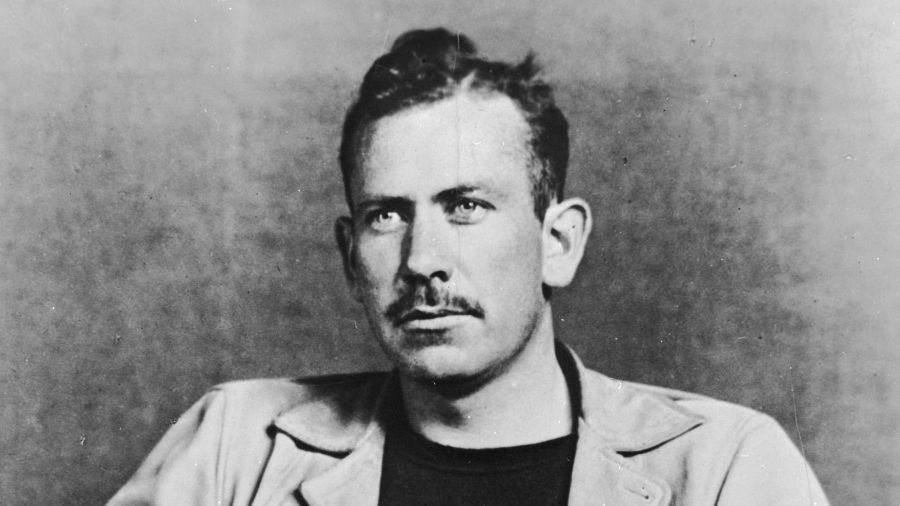
“They should have arrested me.”
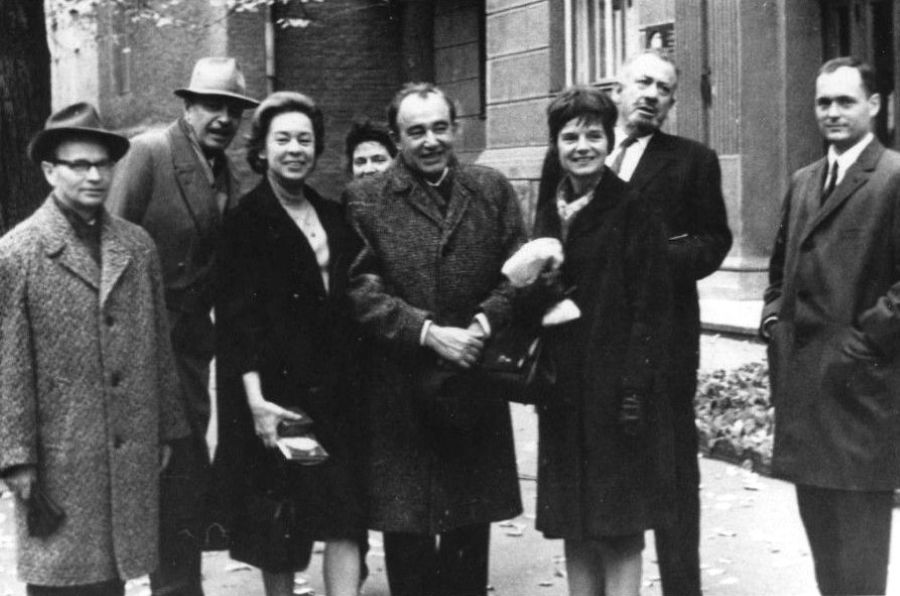
In Moscow in 1963, John Steinbeck denounced the Soviet authorities who had recently arrested Professor Frederick Barghoorn, a visiting American scholar. At a press conference, he argued that visiting scholars and tourists to the USSR should be free to travel, conduct research, and exchange ideas without fear of government interference. In a characteristically direct response, he argued that he should have been arrested for the same reasons as Barghoorn, since he “covered more territory and asked more questions” while on his Fulbright exchange.
Throughout his life, Steinbeck spoke openly about the importance of free expression, which he regarded as fundamental to both literature and democracy.
Through his fiction, journalism, and travel writing, John Steinbeck’s novels served as a window into the American experience for the wider world. Steinbeck chronicled ordinary lives with compassion and a deep belief in human dignity. His works remain among the most widely read in American literature.
Born in Salinas, California in 1902, Steinbeck drew inspiration from the landscapes and communities of the American West. His writing explored the challenges and aspirations of workers, farmers, and families. Through memorable characters and vivid depictions of daily life, he examined the opportunities and hardships that shaped the nation during a period of profound change.
Steinbeck achieved international recognition in the 1930s with novels such as Of Mice and Men and The Grapes of Wrath. Translated into more than 45 languages, these works introduced global audiences to the lives of ordinary people while showcasing regional culture of the United States and values such as hard work, perseverance, and the pursuit of the American Dream.
In the 1940s, Steinbeck went to Europe as a correspondent for the New York Herald Tribune covering World War II. After the war, he returned to fiction, writing Cannery Row, The Pearl, and East of Eden, an allegorical retelling of the Cain and Abel story. These novels, along with Travels with Charley, a travel memoir of his cross-country road trip, provided an authentic view of everyday life in the United States, and ultimately earned him the Nobel Prize in 1962. Steinbeck’s distinct voice appealed to readers around the world who were drawn to American culture after World War II.
Steinbeck traveled extensively until his death in 1968, publishing his work in major U.S. newspapers and magazines. His writing engaged foreign audiences and highlighted the openness and intellectual freedom of Americans.
This role was especially evident during his October 1963 visit to the Soviet Union which was made possible through the Fulbright-Hays Act of 1961, which expanded the Fulbright Program’s mandate to include short-term arts and culture lectureships as well as academic and scientific study. During the Cold War, these exchanges served as an important way to demonstrate America’s democratic values abroad.
The expansion allowed Director of the United States Information Agency Edward R. Murrow to bring both Steinbeck and playwright Edward Albee to Moscow. Over the course of a month, the pair visited Moscow, Leningrad, Kiev, and Tbilisi, bringing two of America’s most influential literary voices directly to individuals behind the Iron Curtain. Steinbeck met with journalists, writers, readers, and students, individually and at public events such as a notable Soviet Readers Forum at Moscow’s Foreign Literature Library. His lecture tour took place during a time where the USSR was arresting and charging other Americans, including Barghoorn, as spies for interviewing Soviet citizens about their everyday lives, prompting the press conference where Steinbeck passionately defended freedom of speech.
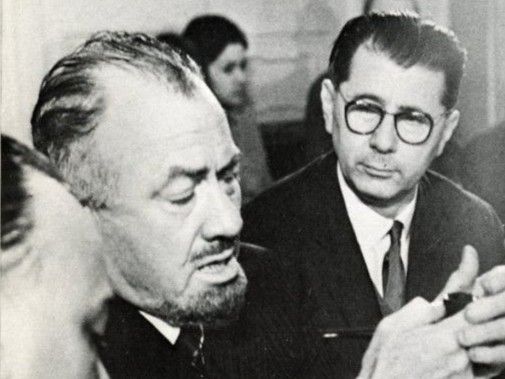
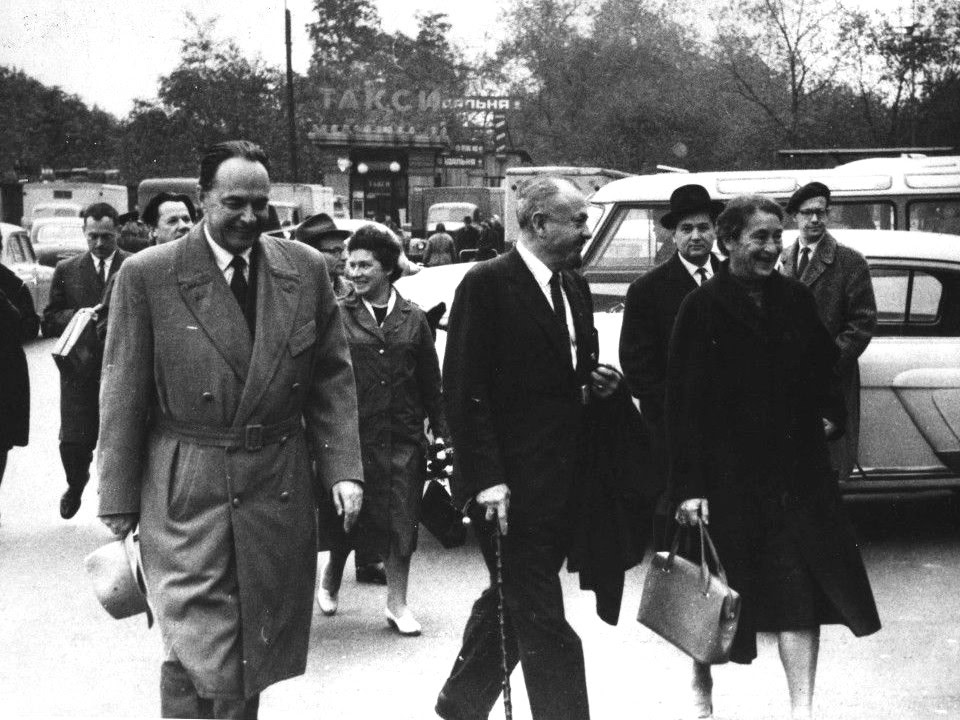
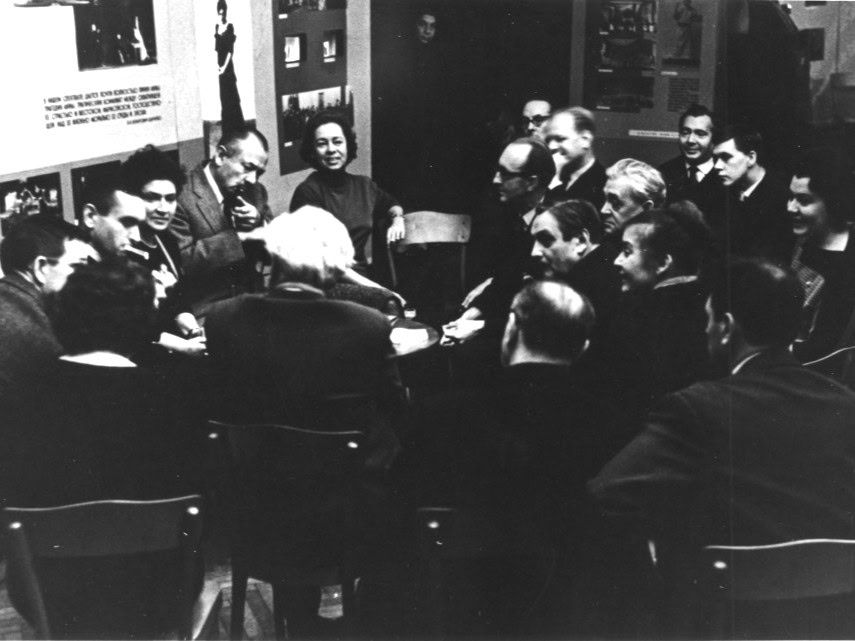
In 1964, Steinbeck received the Presidential Medal of Freedom, the nation’s highest civilian honor. The citation praised him as “a writer of worldwide influence” who had “helped America to understand herself by finding universal themes in the experience of men and women everywhere.”
Nearly sixty years after his death, Steinbeck’s influence endures. His novels continue to introduce readers in the United States and around the world to distinctively American experiences. Fulbright exchanges by American cultural figures, such as those undertaken by Steinbeck, Albee, and the composer Aaron Copland, highlighted the nation’s achievements and challenged other societies that limited speech and inquiry. Through his accomplishments, Steinbeck came to embody the best of American letters, and his commitment to free expression endures as an inspiration to writers and readers everywhere.
Sources regarding USSR visit:
Peter Bridges, “A Note on Steinbeck’s 1963 Visit to the Soviet Union,” Steinbeck Review (Martha Heasley Cox Center for Steinbeck Studies), 80–94.
“Steinbeck Meets the Soviet Press; Author, in Moscow, Conducts Wide-Ranging Conference; Wife Accompanies Him; Impressed With Soviet Man,” New York Times, October 22, 1963,
August Hagemann, “Travels without Charlie: Theofanis Stavrou on John Steinbeck and the Soviet Union in the ’60s,” The New Contemporary: Notes from the Havighurst Center, Miami University, March 18, 2019.