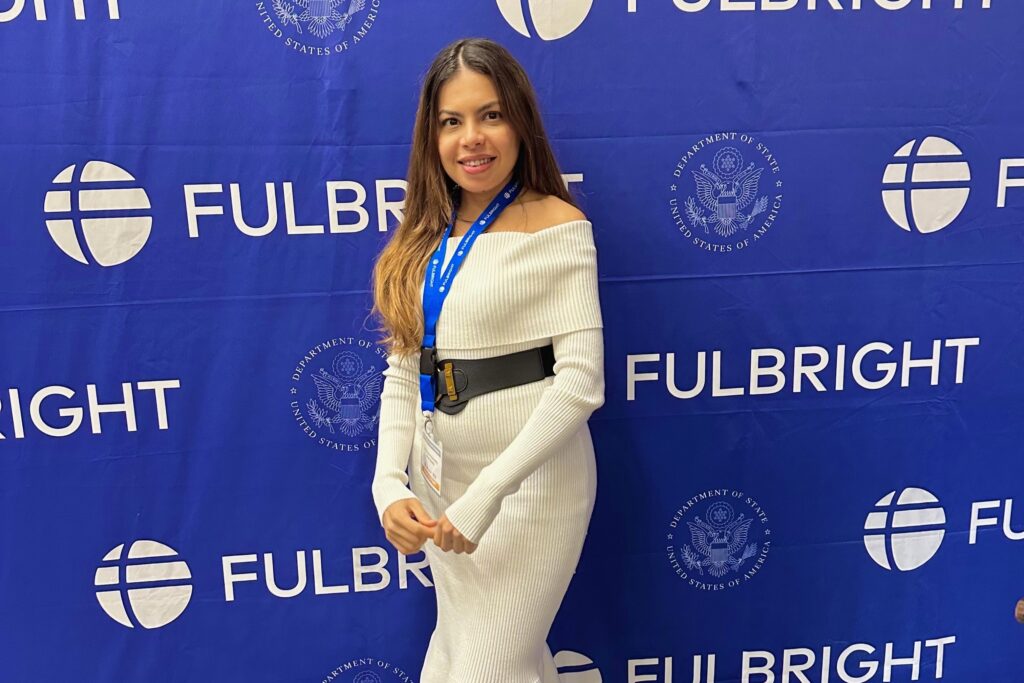
Eya Boughanmi wanted to keep pets safe from parasites. Now, her research on parasitic and fungal infections will help to keep American crops, like cereal grains and oranges, on grocery store shelves.
A doctoral researcher in analytical chemistry who recently completed her Fulbright research year, Eya Boughanmi has always been driven by one central goal: connecting research and industry to solve practical challenges. “I’m passionate about the potential of research to solve real-world problems,” she explains. That passion led her to pursue a career in STEM with a focus on agriculture, protecting crops such as tomatoes, olives, and citrus from fungal infections, and safeguarding the agricultural industries in Tunisia and the United States.
Boughanmi is developing analytical tools capable of detecting invisible threats: toxins, pathogens, and disease markers that impact human, animal, and soil health. Her work, uses both analytical chemistry and biotechnology to create precise diagnostic devices.
Boughanmi first learned about Fulbright when her PhD advisor in Tunisia, also a Fulbrighter, encouraged her to apply. For Boughanmi, the Fulbright Program represented “an excellent opportunity to expand my research, collaborate internationally, and gain more exposure to innovation and technology.” She saw Fulbright as a pathway to connect science, entrepreneurship, and global collaboration.
In 2023, she participated in the Falling Walls Lab pitch competition, a global forum where researchers and innovators present breakthrough ideas. At the time, she was developing a startup concept focused on rapid diagnostics for a parasitic called leishmaniasis affecting animals and transmissible to humans. The disease is widespread in Tunisia, across North Africa, and in parts of Europe and the United States. Her motivation was deeply personal – she lost her dog to the disease. She decided to create an affordable, accurate, and rapid diagnostic tool capable of detecting infections at early stages. Early detection, she argued in her pitch, could prevent suffering, reduce transmission, and protect both animal and human health.
She won the pitch competition, which strengthened her commitment to entrepreneurship and networking. She believes that “networking is the key to a successful career and opens new perspectives.”
After Boughanmi completed her Fulbright, she expanded her research into agricultural applications of analytical detection strategies. She is applying biosensor technologies to detect fungal infections in crops, an issue with significant economic and consequences in both Tunisia and the United States.
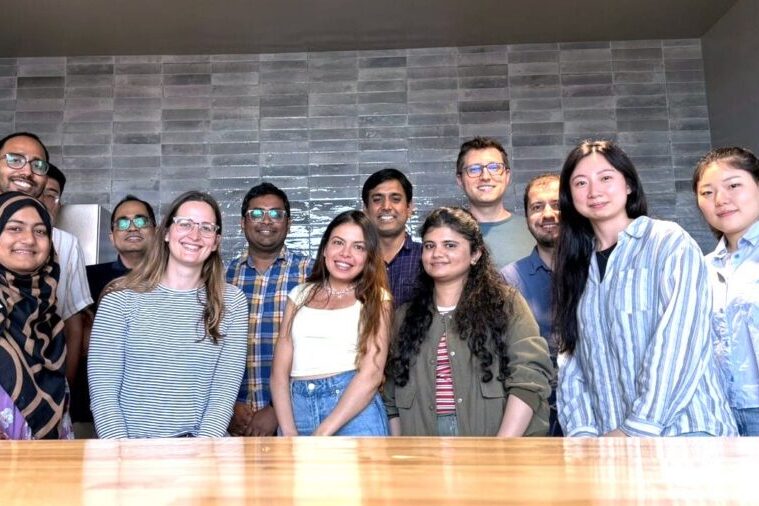
In Tunisia, her work on developing a non-invasive electrochemical biosensor for tomato plant infections caused by Fusarium oxysporumis is especially relevant in geothermal greenhouse systems where wilt and fruit rot are major concerns. Fusarium threaten other agricultural products like cereals, olive trees, and citrus groves. This research is particulalry applicable to agricultural areas in the United States. For example, Florida’s sandy, acidic soils favor Fusarium crown and root rot, while California has confronted aggressive Fusarium wilt race 3 strains that overcome traditional resistance. Outbreaks have also been reported in other southeastern, northeastern, and mid-Atlantic states that produce tomatoes.
Across these regions, early-stage detection is critical. Advanced monitoring tools can support more sustainable disease management, reduce reliance on fungicides, and protect crop yields. In the United States, Eya leveraged interdisciplinary collaboration to contribute to the development of rapid, reliable, and field-ready diagnostic strategies.
Her Fulbright experience broadened her scientific perspective and strengthened her commitment to transnational research. She takes pride in serving as a bridge between her home laboratory in Tunisia and advanced research institutions in the United States. Contributing to solutions that affect Tunisia and other developing countries, she says, is deeply meaningful in her journey as a researcher.
In Tunisia, she will continue to develop affordable analytical platforms that enable early detection of diseases. Through science, entrepreneurship, and international collaboration, she is building tools with a strong economic return for American and Tunisian farmers and consumers.