
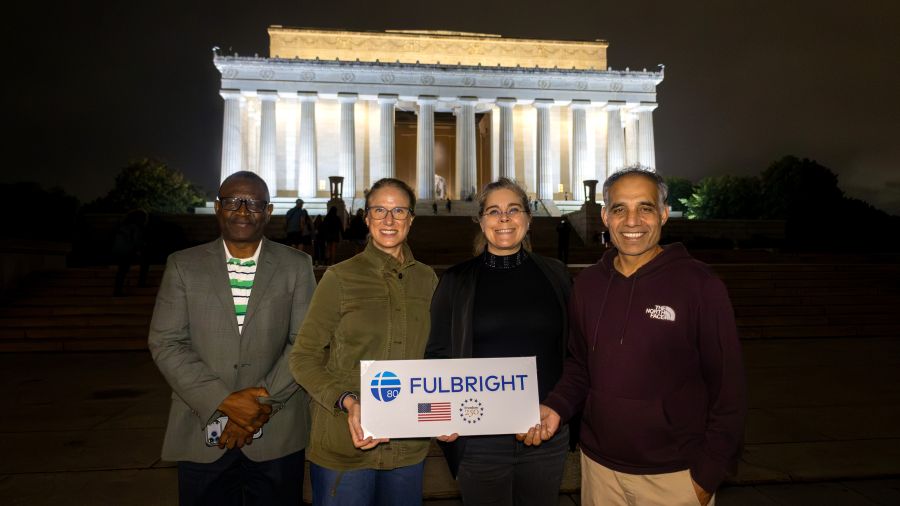
“I went in thinking of cybersecurity as a technical discipline,” said Chris Dolan of his Fulbright Specialist award to Kosovo. “I came out thinking of it as a relationship discipline.”
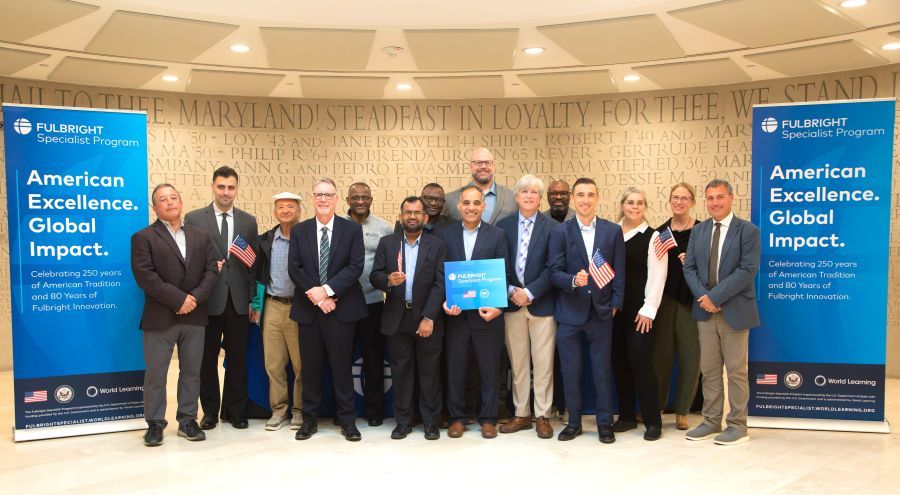
Dolan, a Teaching Professor of Intelligence Studies and Cybersecurity at Pennsylvania State University Harrisburg, was one of 14 Fulbright Specialists who gathered at a symposium in September 2026 to share the impact of their Fulbright Specialist exchanges. Dolan, like many of his fellow alumni, credited Fulbright with expanding his professional connections and reshaping his career. In Kosovo, he worked to detect cyber threats and increase global cybersecurity. His project with the Kosovo Centre for Security Studies was an opportunity to share expertise on U.S. cybersecurity frameworks and best practices with Kosovo’s government ministries, private-sector partners, and civil-society organizations.
Like Dolan, many of the Fulbright Specialists advised governments on the adoption of American cybersecurity standards, contributing to more cohesive global cybersecurity that benefits us all. In the United States, they work as cybersecurity practitioners in the private and public sectors, as well as educators at the community colleges and research universities building American’s cybersecurity workforce.
Their recent Fulbright Specialist projects had taken them to institutions across Africa, Asia, Europe, and Latin America, where they trained law enforcement professionals in digital forensics, advised government ministries on national cyber defense, and helped institutions adapt American frameworks and standards to their own contexts. Each Fulbright Specialist’s project contributed to a more secure global digital environment, in turn safeguarding America’s systems and institutions.
The symposium, Advancing America’s Cyber Legacy: Fulbright Specialists and the Future of Global Cybersecurity, was hosted at the University of Maryland, College Park. Alumni shared how their work contributes to the “Cyber Strategy for America,” in fields such as cryptography, critical infrastructure, cybersecurity career readiness, and introducing U.S. cybersecurity standards abroad. They also highlighted ongoing collaboration with the institutions abroad where they completed their Fulbright awards, demonstrating both Fulbright’s ability to rapidly respond to a changing cybersecurity landscape, and the Fulbright Program’s long-lasting impact.
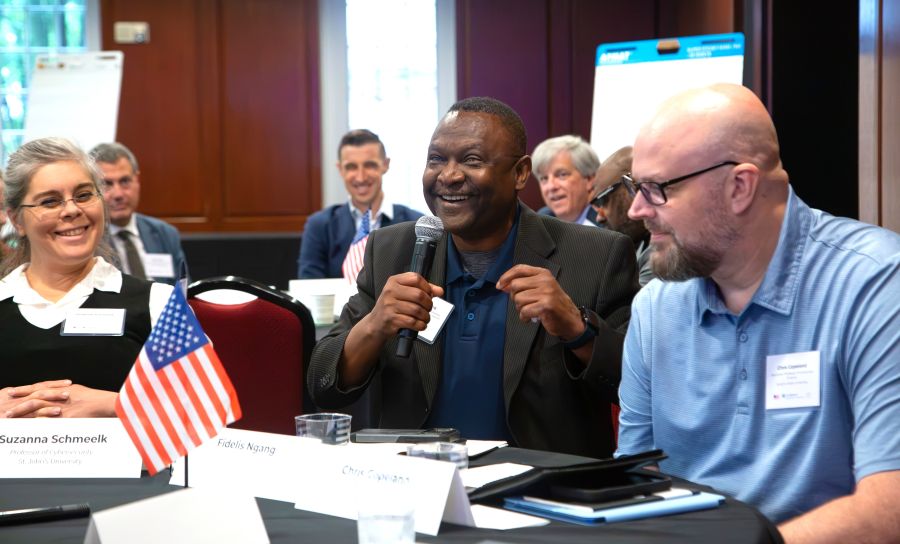
“When institutions abroad align with [a U.S. cybersecurity framework] like NICE and can demonstrate their knowledge and ability to perform a task, that’s the value that these programs bring — not just to the United States, but globally,” said William Butler, Vice President of Cyber Science Outreach and Partnerships at Capitol Technology University.
For alumni, the convening was also an opportunity to reflect on the concrete and lasting impact of their work as Fulbright Specialists. Patrick Kyhos, Senior Counsel for Global Technology and Cybersecurity at TransUnion and a Fulbright Specialist alumnus to Bulgaria, described how conversations that began on campus quickly expanded to include legal scholars, ministry officials, and law enforcement leaders – relationships that he says contributed, months after his visit ended, to the takedown of criminal cyber networks in the region. “Being there in person every day and being the resource for the whole community, not just your specific university or the specific department, led to something that I don’t think anyone would have envisioned when the program started.”
Alumni also learned about cutting-edge research through presentations from faculty and graduate students at the Maryland Cybersecurity Center (MC2), one of the nation’s leading university cybersecurity centers for research in cryptography, and cybersecurity education.
For Dylan Presman, a Fulbright project in Sierra Leone working with government officials on digital governance changed how he approaches his work as Director for Budget and Assessment at the Office of the National Cyber Director: “As our lives move increasingly online, I’ve come to believe cybersecurity is no longer simply a technical pursuit about protecting computers or networks. Increasingly, cybersecurity is about protecting people.”
About the Fulbright Specialist Program
The Fulbright Specialist Program is a component of the Fulbright U.S. Scholar Program that sends more than 400 experienced U.S. faculty and professionals abroad annually to consult and engage in training and educational activities for two-to-six weeks. Specialists represent a wide range of professional and academic disciplines. They execute projects proposed by overseas institutions and recommended by U.S. Embassies or Fulbright Commissions, supporting both U.S. policy goals and local priorities. Learn more about the program and application process at fulbrightspecialist.worldlearning.org.