
A Fulbright to Venice launched the American artist’s career transforming the craft of glassblowing into immersive sculptures
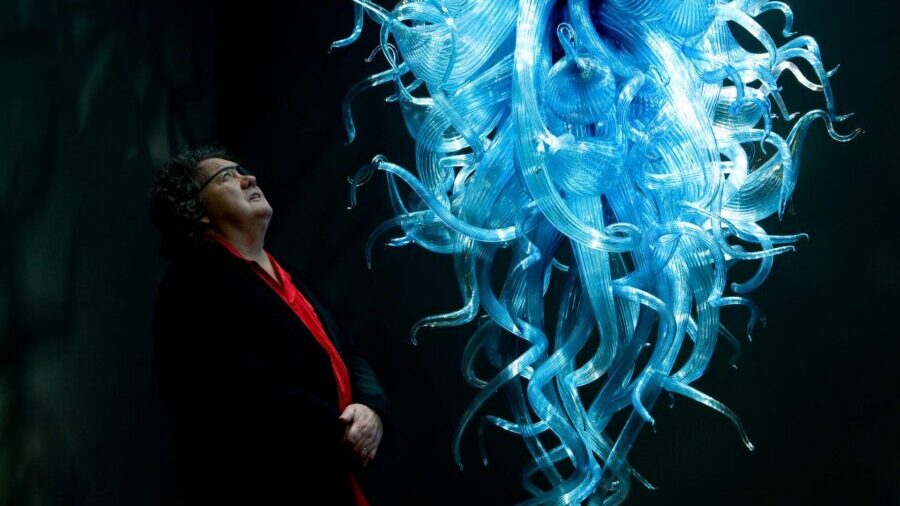
© 2008 Chihuly Studio. All rights reserved. Photo by Teresa Nouri Rishel
Few American artists have projected bold, innovative art onto the world stage like Dale Chihuly. His monumental installations in major museums, botanical gardens, historic landmarks, and public spaces have captivated audiences worldwide. A Fulbright award to study glassmaking in Murano, Italy was the pivotal experience that shaped his artistic vision and helped elevate glass into a major contemporary art form.
Born in Tacoma, Washington, Chihuly was drawn early to the interplay of light and material. He became interested in transforming glass into sculpture while earning a degree in sculpture from the University of Wisconsin and a Master of Fine Arts from the Rhode Island School of Design (RISD). “As soon as I blew that bubble,” he recalled, “I decided I wanted to be a glassblower.”
In 1968, Chihuly received a Fulbright award to work and study in Italy. “If it weren’t for the Fulbright, I would have probably never had a chance to go to Venice,” he later reflected. “It was such a wonderful opportunity for me… probably more than any single thing in my career, it has shaped my career.”
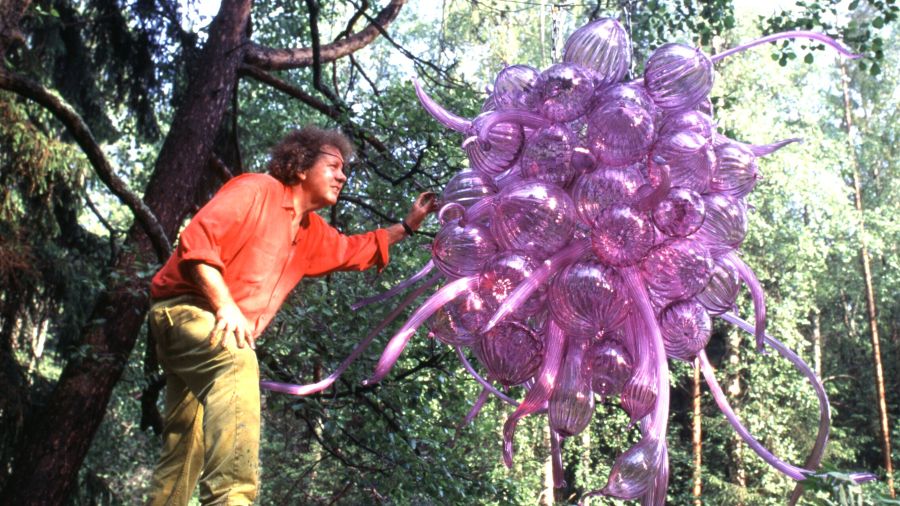
He had a rare invitation to work in the secretive Venini factory on the Venetian island of Murano, immersed in a centuries-old tradition of technical mastery and collaborative production. Inspired by the synchronized movements of artisans working around a single molten form, Chihuly later adopted the same “team approach” and it became central to his practice.
Chihuly combined both American studio glasswork traditions and centuries of Venetian craftsmanship. Returning to the United States, Chihuly went on to lead the glass program at RISD and co-founded the Pilchuck Glass School in Washington State, now one of the world’s leading centers for glass art. Pilchuck blended European tradition with American experimentation, transforming glasswork from a craft to a central force in contemporary art.
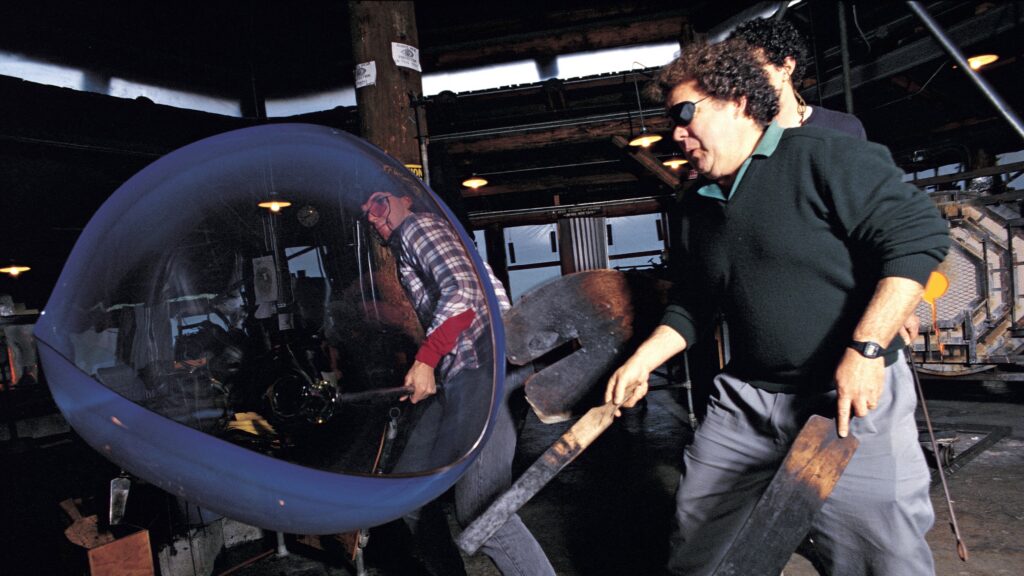
Over the following decades, Chihuly built studios that functioned as creative laboratories, directing teams to produce increasingly ambitious architectural commissions and public installations. After a 1976 car accident left him blind in one eye, he stepped back from blowing glass and embraced the role of artistic director. The shift allowed him to work at an unprecedented scale, translating drawings into monumental site-specific works that envelop viewers and interact with their architectural or natural surroundings.
Chihuly Studios employs over 50 artists and staff members in Seattle to execute the artistic vision of Dale Chihuly and manage the day-to-day operations necessary for large-scale, commissioned works of art in demand around the world. Chihuly’s wife and business partner, Leslie Jackson Chihuly, serves as the President and CEO.
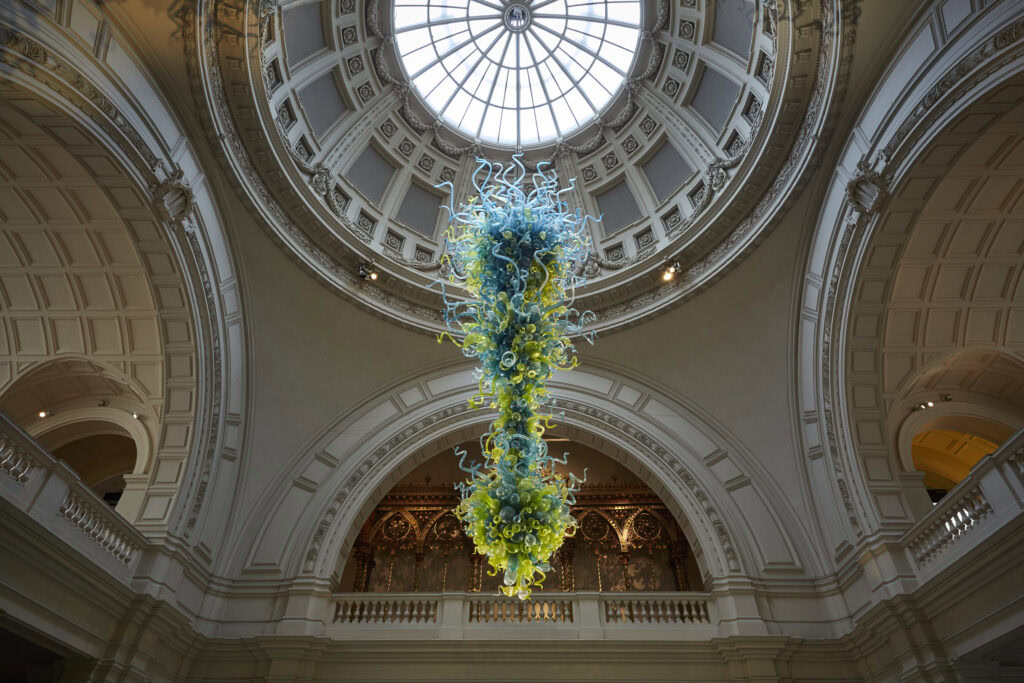
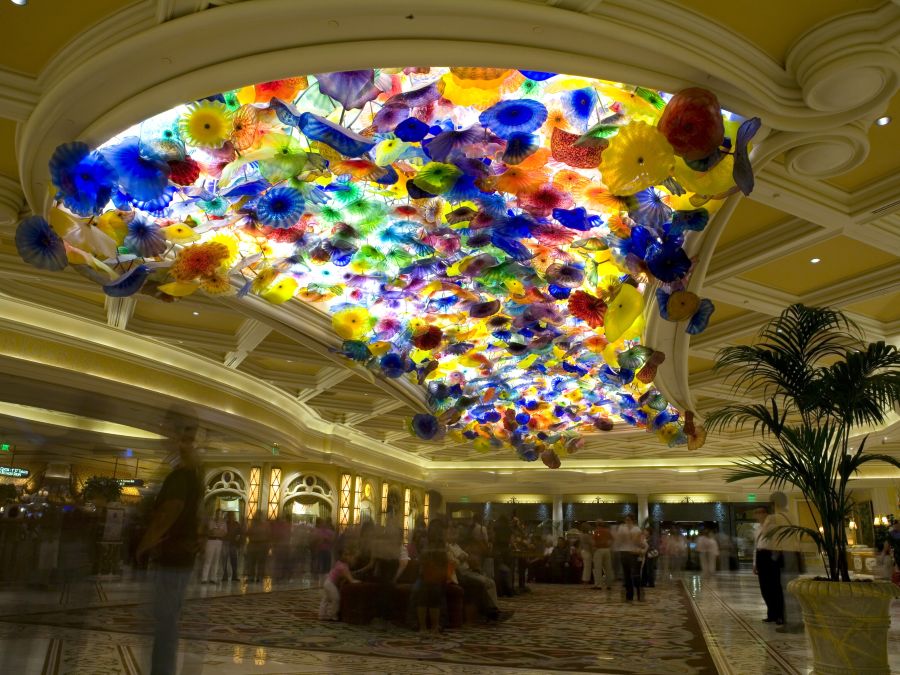
Chihuly helped redefine both the creative and commercial possibilities of contemporary art. His exhibitions demonstrated that ambitious installations could attract broad public audiences. His success elevated the market for contemporary glass and demonstrated that the medium could command the same critical and institutional attention as traditional sculpture. His work is now featured in more than 200 museums and public spaces worldwide. This includes iconic works that greet visitors from around the world, such as V&A Chandelier of the Victoria and Albert Museum in London and Fiori di Como of the lobby in the Bellagio Hotel in Las Vegas. His artwork is also showcased at the Museum of Fine Arts in Boston and the Renwick Gallery in Washington, D.C., and the permanent Chihuly Garden and Glass installation in Seattle has introduced millions to the expressive possibilities of glass, which he calls “the most magical of all materials.”
Chihuly has returned twice to Venice, in 1996 and 2026, to debut new works in the place where Fulbright inspired his vision for large-scale glass sculpture. He described his 1996 exhibition Chihuly Over Venice as “a love letter to the city that gave him his most enduring creative revelations.”
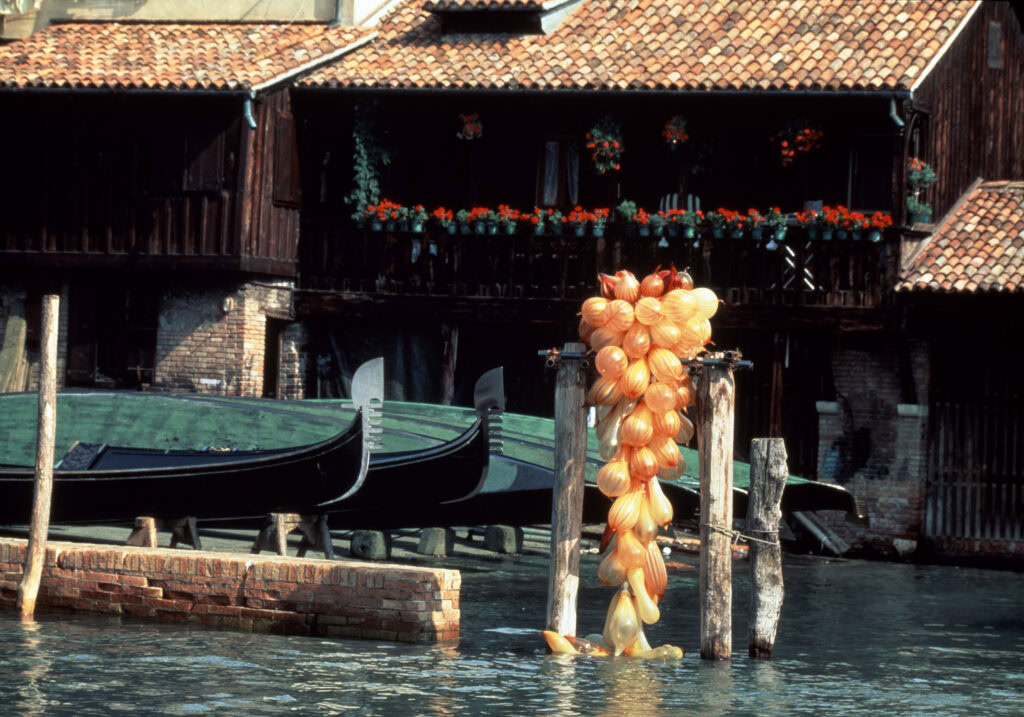
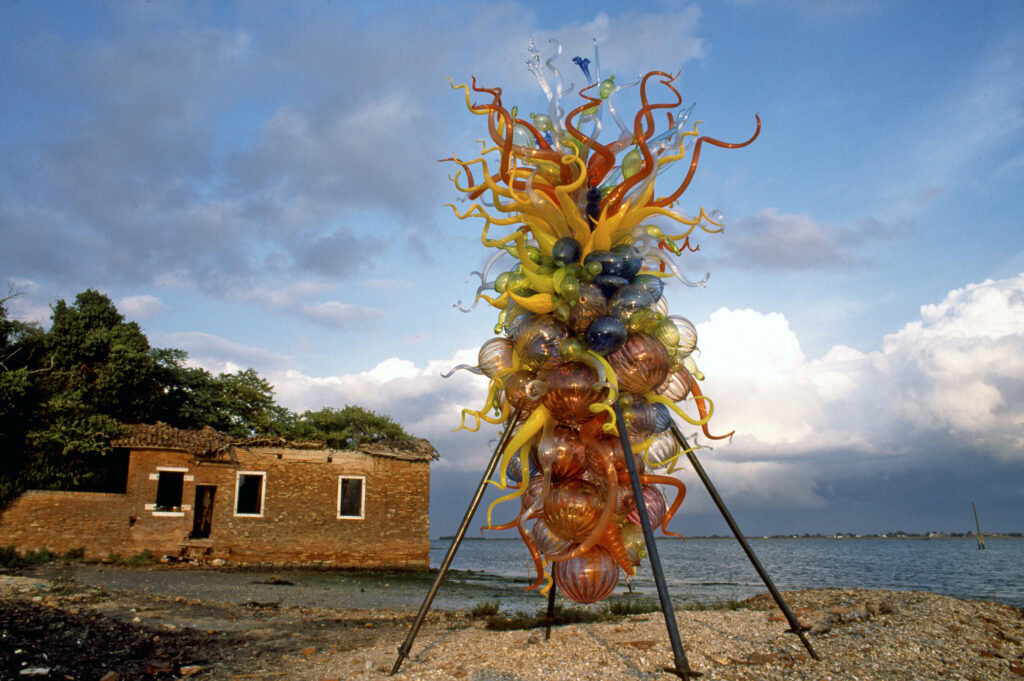
At the time, he erected fourteen temporary installations throughout the city, with sculptures floating above waterways and punctuating piazzas, reframing Venice as a living gallery. Encountered by passersby and later seen by millions on television, the project brought him international renown and expanded expectations for what glass—and public art—could achieve.
“There is nothing that possibly compares with Venice. Its light, its history, and its breathtaking architecture have been a constant source of inspiration for me,” Chihuly reflected.
Thirty years later, CHIHULY: Venice 2026 premiered concurrent with the 61st Venice Biennale. It featured three monumental new works along the Grand Canal and a 31-foot sculpture titled Gold Tower in the garden of Palazzo Franchetti. The historic Istituto Veneto di Scienze, Lettere ed Arti at Palazzo Loredan served as an interpretive and archival center, tracing the arc of Chihuly’s career from his Fulbright year to international recognition.
According to Leslie Jackson Chihuly, “CHIHULY: Venice 2026 [is] a chance to reflect on his legacy, the impact he has had, and the inspiration we have all received from this remarkable city.”
The exhibition honors Chihuly’s artistic accomplishments and underscores his lifelong commitment to experimentation, teamwork, and risk-taking—principles first crystallized in the workshops of Murano and later fine-tuned in the United States. From his time as a young Fulbright artist absorbing Venetian tradition to an innovator who redefined the possibilities of glass, Chihuly’s career demonstrates how international exchange can spark artistic innovation.
See the artist talk about his creative vision for Chihuly Over Venice. Mercato del Pesce di Rialto Chandelier, 8 x 5 x 5′ (center); Venice © 1996 Chihuly Studio. All rights reserved. Photo by Russell Johnson.