
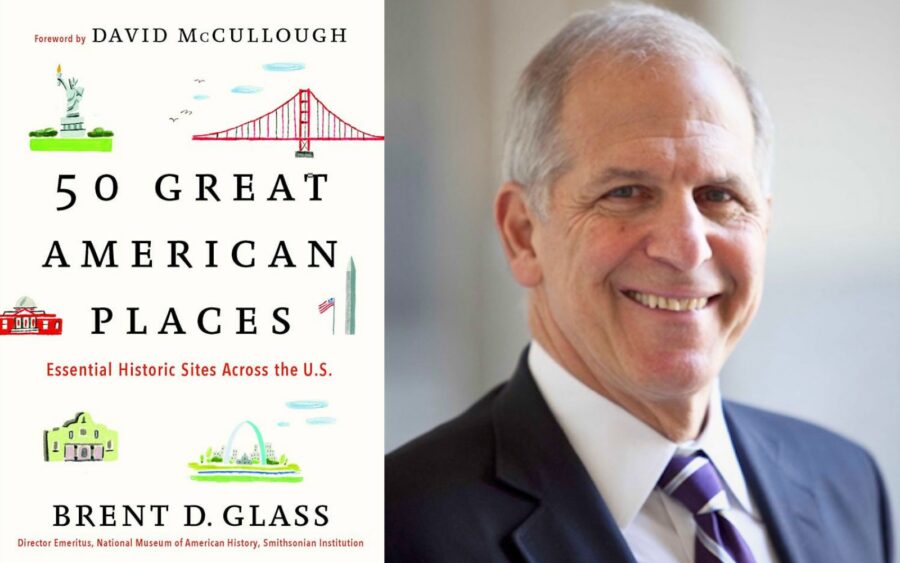
The celebration of the United States’ 250th anniversary of its independence is drawing interest well beyond America’s borders, including in Slovenia. Earlier this year, the Science and Research Center of Koper (ZRS Koper) marked the anniversary by bringing Fulbright Specialist Brent Glass to Slovenia to share lessons from American leadership in museum design, museum administration, and public history. As a museum professional, Glass is an expert on making historical knowledge accessible to broad audiences through museums, heritage sites, and civic institutions.
ZRS Koper, an interdisciplinary research institute, invited Glass to Slovenia to help scholars and students think differently about how history and cultural heritage can be preserved and shared with the public. Glass has played a key role in shaping how Americans encounter their own history, including leading the Smithsonian’s National Museum of American History and the Pennsylvania Historical and Museum Commission. As a Fulbright Specialist, he gave Slovenian museum professionals, researchers, and graduate students a direct view of how the United States leads in public history practices during this historic year.
Glass shared examples of how American museum practices have evolved to bring key events and figures like George Washington to life. He emphasized how immersive experiences using digital technologies have deepened the public’s engagement with America’s history.
Glass was struck by how much his Slovenian audiences wanted to learn about the United States. “Engaging with graduate students during my lectures at ZRS Koper was especially rewarding,” Glass said. “Their questions and observations reflected a deep interest in American history.”
He also made the case for a fundamental shift in how museums think about their purpose and the visitor experience.
“Most museums start out being very collection-driven: they have a collection, display it, do research, and if the public likes it, fine. I think now the experience of the visitor, through immersive technology or through experiential learning, is something that we have been promoting and that the United States does well,” Glass explained.
He added that there is also a growing interest among Slovenians about the private sector’s involvement in American museums: “How museums can employ or engage corporate, foundation, or individual donors is something that I think America as a country is more experienced in than many of our counterparts around the world.”
Much of Glass’s impact happened away from the lectern. He met museum directors and heritage professionals across Slovenia to share best practices in museum governance, visitor engagement strategies, and artifact conservation, including a visit to the Park of Military History Pivka, one of Slovenia’s leading military museums.
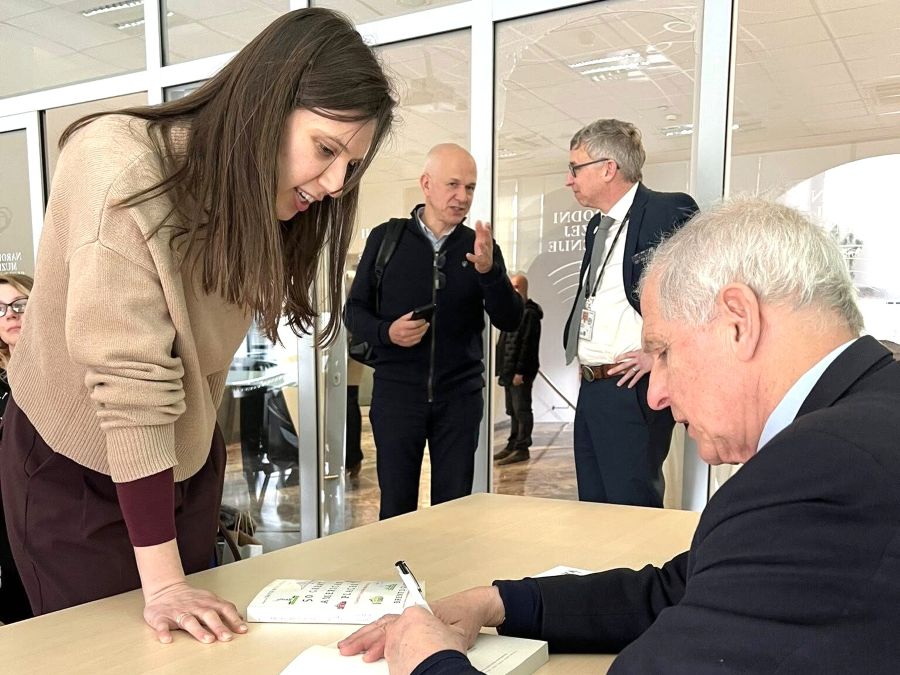
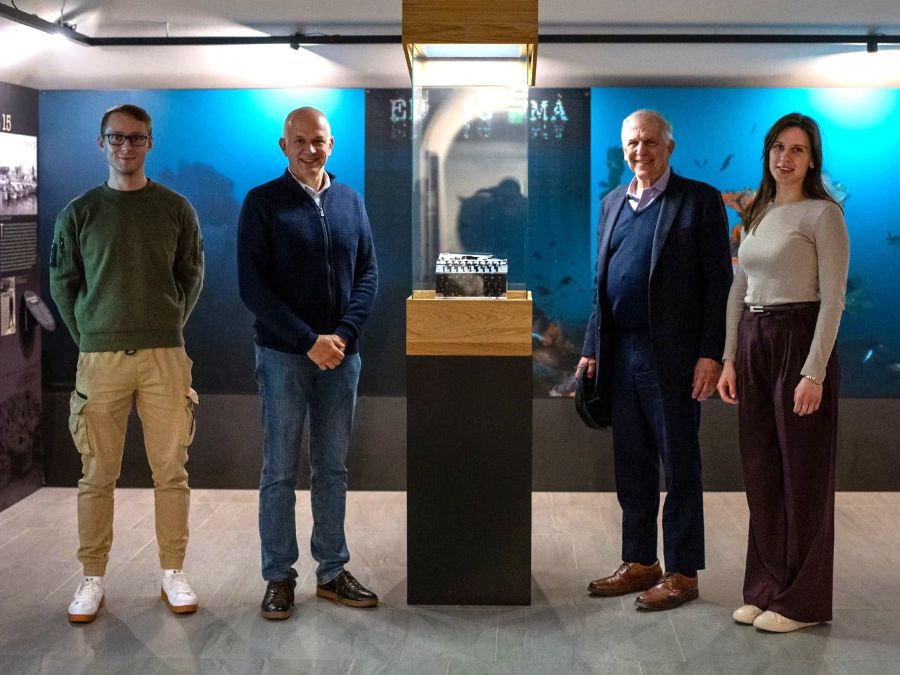
He also engaged with the public to celebrate Freedom 250 through events at the U.S. Embassy in Ljubljana, a lecture opening the National Museum of Slovenia‘s commemoration of America’s 250th anniversary, and an author signing of his book 50 Great American Places, which takes readers on a literary tour of significant American landmarks from Independence Hall in Philadelphia, Pennsylvania, to the Mall of America in Bloomington, Minnesota, and examines their role in shaping American identity and values such as democracy and self-governance.
Glass left Slovenia with ideas for new collaborations already taking shape. One would link ZRS Koper, the Technical Institute of Slovenia, and the Tesla Science Center at Wardenclyffe in New York, which is built around the only surviving laboratory of inventor Nikola Tesla. In a visit spent looking back on 250 years of American history, the project’s most lasting mark may be the new connections it is setting in motion across the Atlantic.
The Fulbright Specialist Program is a component of the Fulbright U.S. Scholar Program that sends more than 400 experienced U.S. faculty and professionals abroad annually to consult and engage in training and educational activities for two-to-six weeks. Specialists represent a wide range of professional and academic disciplines. They execute projects proposed by overseas institutions and recommended by U.S. Embassies or Fulbright Commissions, supporting both U.S. policy goals and local priorities. Learn more about the program and application process at fulbrightspecialist.worldlearning.org.