
The Enduring Legacy of the Declaration of Independence
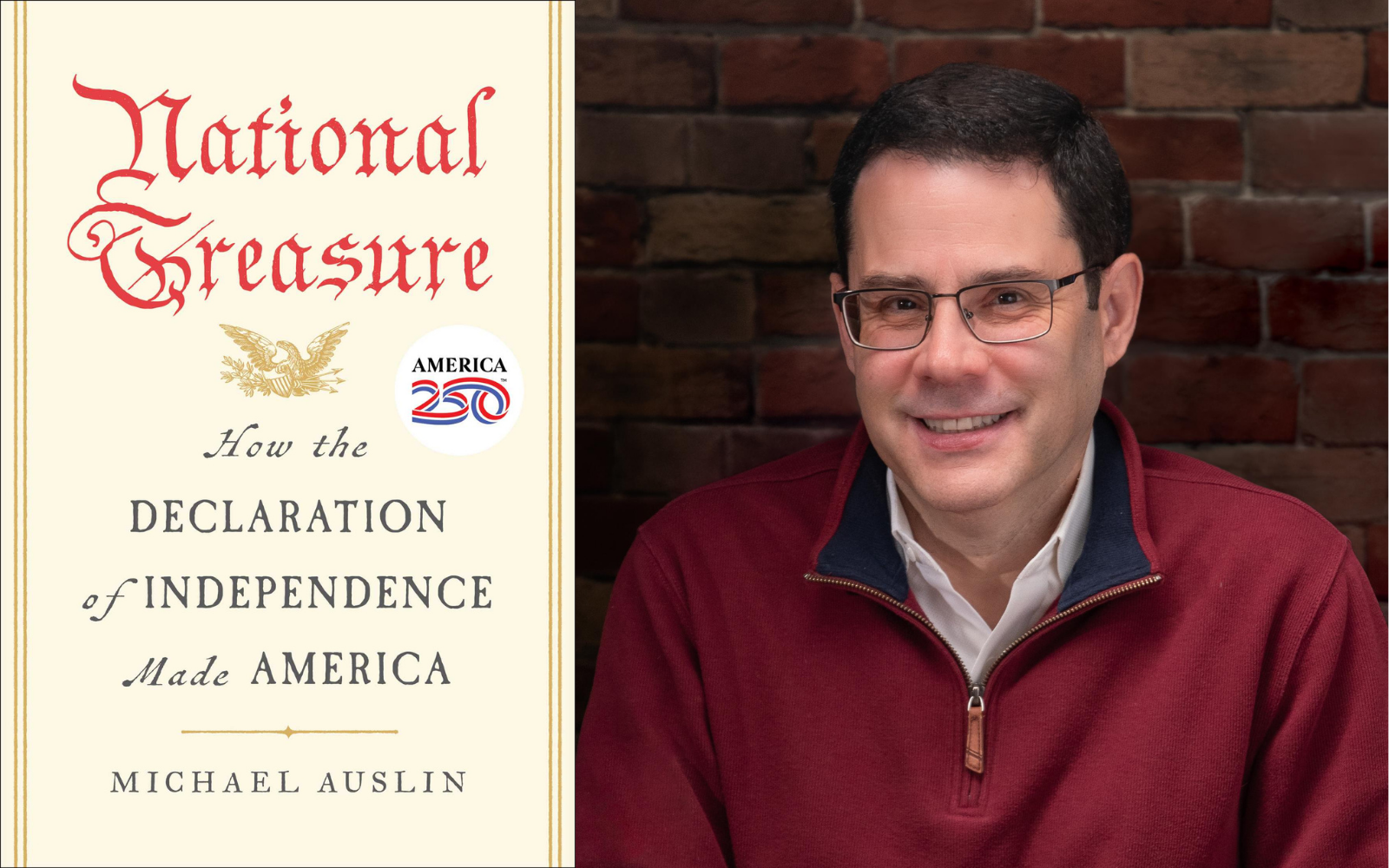
Fulbright Alumnus and Historian Michael Auslin’s new book, National Treasure: How the Declaration of Independence Made America, examines the document’s journey in American culture from 1776 to the present day.
When Auslin arrived in Japan as a Fulbright graduate student, he expected to deepen his understanding of Japanese history and conduct research for his dissertation. More surprisingly, he found that the experience led him to a deeper understanding of America. Eventually, his experience became a book about the enduring power of the Declaration of Independence.
Dr. Auslin has spent decades examining the forces that shape nations and societies as a professor, author, and public speaker. He currently serves as a distinguished research fellow at Stanford University’s Hoover Institution. His scholarship has established him as a prominent voice on U.S. policy in Asia and the geopolitics of the Indo-Pacific region.
“[My Fulbright award to Japan] allowed me this unparalleled opportunity at the time to enter into Japanese society and Japanese history,” Auslin recalls. “But I always did it thinking as an American and always thinking about America in relation to what I was doing.” Studying another country, Auslin found, also deepened his appreciation for his own. “I think ultimately, the Fulbright Program is asking us to be better citizens,” he says.
In Japan, he conducted research that became the foundation of his doctoral thesis and first book on Japanese diplomacy with the United States. This led to his early roles as a professor of history at Yale and director of Japanese studies at the American Enterprise Institute. His Fulbright experience launched a distinguished career as an expert in America’s diplomatic engagement with Asia. It also gave him a new perspective on his own country—one he says the Fulbright Program has encouraged since its creation 80 years ago.
“I had this unique privilege with Fulbright,” he says, “and therefore I felt a responsibility.” Over time, that sense of responsibility led him to focus on America’s own history and civic traditions. “Fulbright allowed me to go out and educate myself about America in the world,” Auslin explains. “What was left to do was educate myself about America at home.”
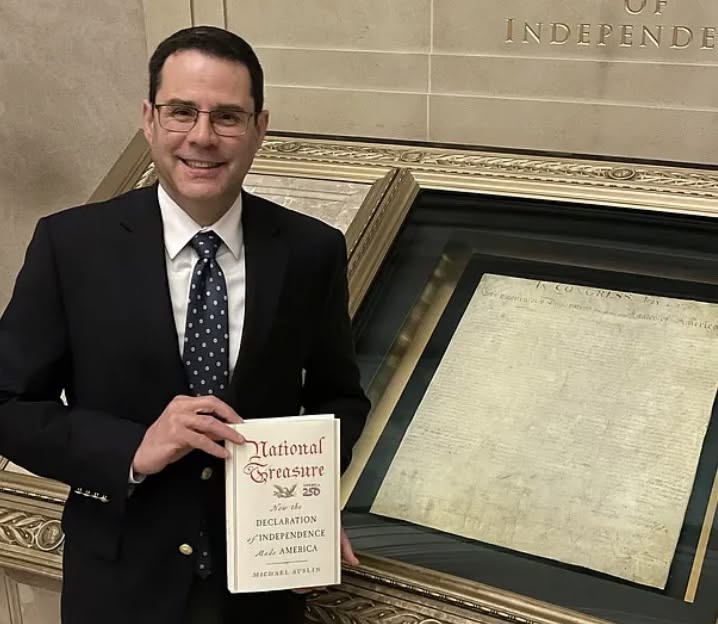
That realization ultimately led to his book, National Treasure. Beginning with the Declaration’s creation in 1776, Auslin follows both the physical document and the ideals it embodies across 250 years of American history. The book traces the Declaration’s journey from a Philadelphia boarding house to secret wartime storage and ultimately to its place of honor in the National Archives.
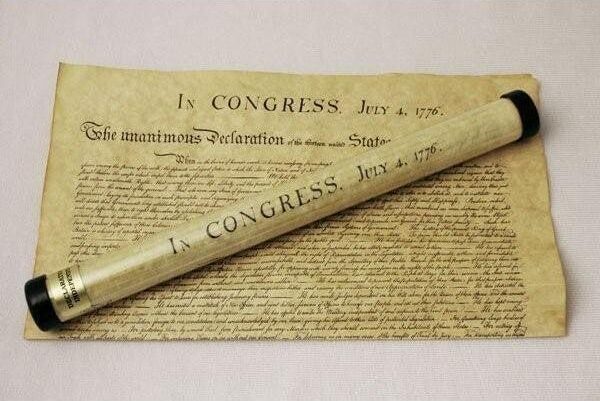
Along the way, Auslin examines how Americans turned the Declaration into one of the nation’s most treasured symbols, by telling the story of three ways the Declaration functions as a material and cultural touchstone. The first is the parchment itself; the second is the Declaration as an embodiment of American ideals to uphold and protect; and the third is the Declaration as an icon represented in art and popular culture, from paintings and reproductions to t-shirts and Christmas ornaments, which Auslin calls “a perfect marriage of civics and commerce.”
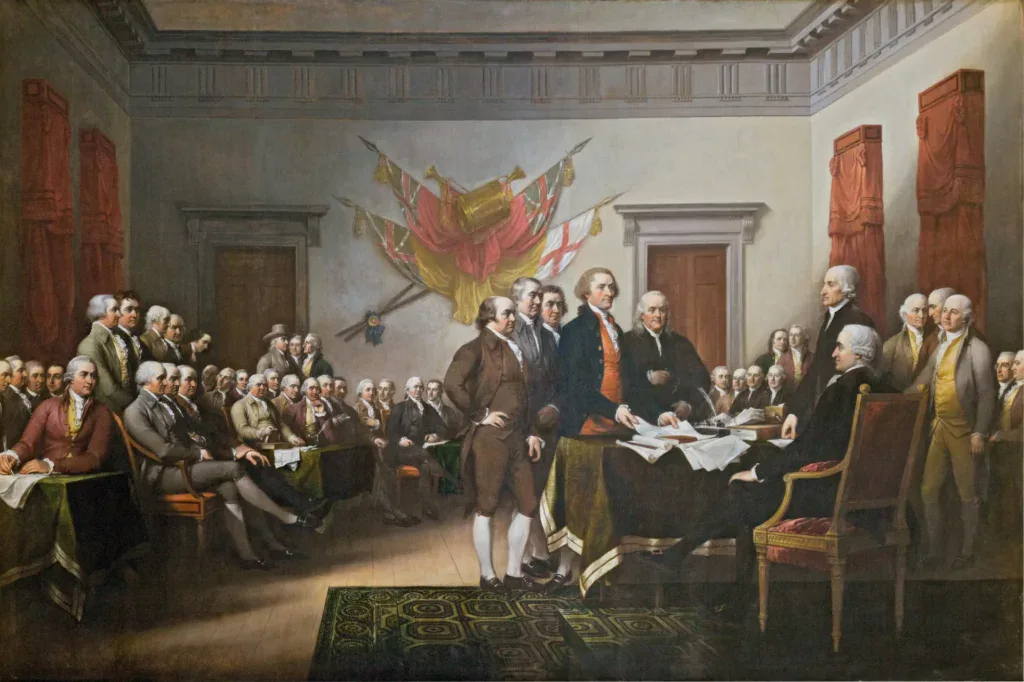
While liberty and equality remain central themes of the Declaration, Auslin argues that the document also contains a powerful message of unity. From its reference to “one people” to the signers’ pledge of mutual commitment, he sees the Declaration as expressing a shared civic bond that has helped shape the American story. “This is really our great statement of unity as Americans,” he says.
He credits Fulbright with helping him arrive at that conclusion. Living and studying abroad gave him a unique vantage point on the United States. Examining how other societies understood their histories and traditions made him more aware of the ideas and institutions that connect Americans.
Today, Auslin still views his Fulbright experience as a guiding influence that launched a career spent examining America’s place in the world and inspired his exploration of America’s founding ideals. As Americans celebrate the Declaration’s 250th anniversary, he hopes readers will see it not only as a historic artifact, but as a living expression of the principles and civic bonds that continue to shape the nation 250 years after it was signed.