

A 90-million-year-old fossil from northern Patagonia is reshaping scientific understanding of an enigmatic genus of dinosaur called alvarezsaurs. Alvarezsaurs are small dinosaurs known for their tiny teeth and unusually short, single-clawed arms. They belong to the group of dinosaurs known as therapods, which also include iconic predators like Tyrannosaurus Rex and modern birds.
Dr. Peter Makovicky, a professor at the University of Minnesota Twin Cities and 2025 Fulbright U.S. Scholar to Argentina, worked with researchers in Patagonia to identify a remarkably complete skeleton of Alnashetri, a small, bird-like alvarezsaur from the Cretaceous Period. The discovery was a breakthrough that identified a long-missing link in our understanding of how these dinosaurs have evolved. He credits the international collaboration supported by the Fulbright Program with enabling the extended, on-site research required for a breakthrough of this scale.
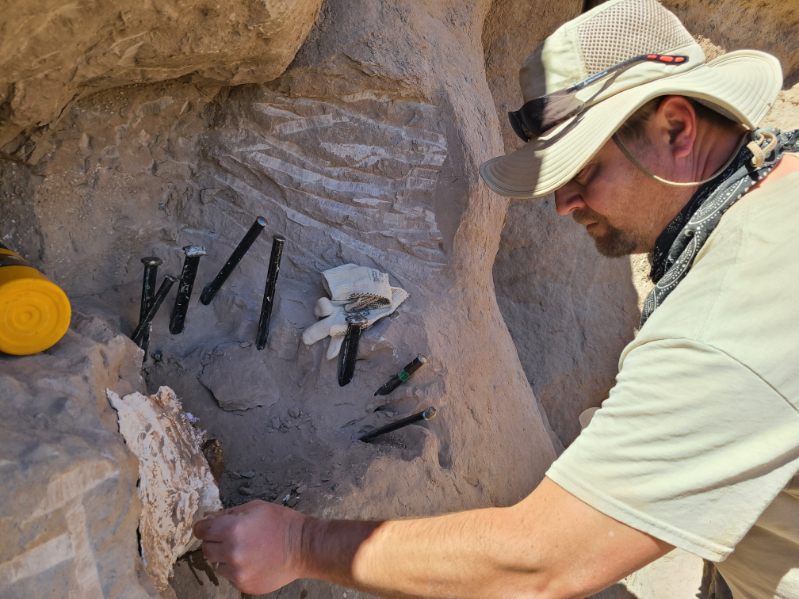
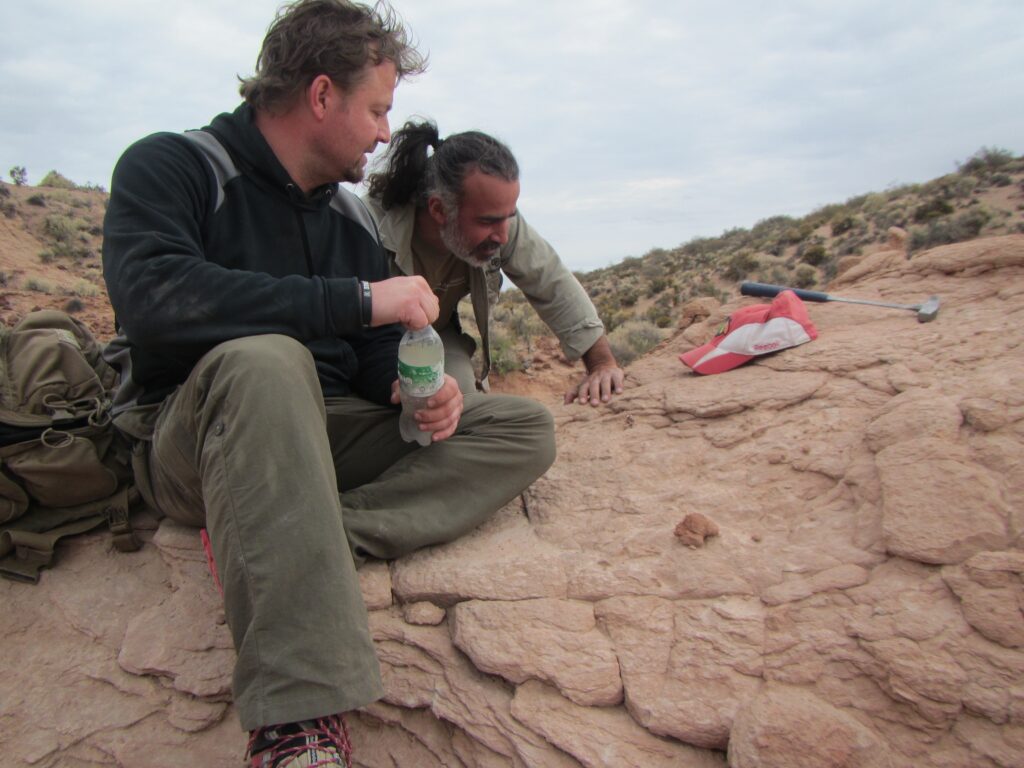
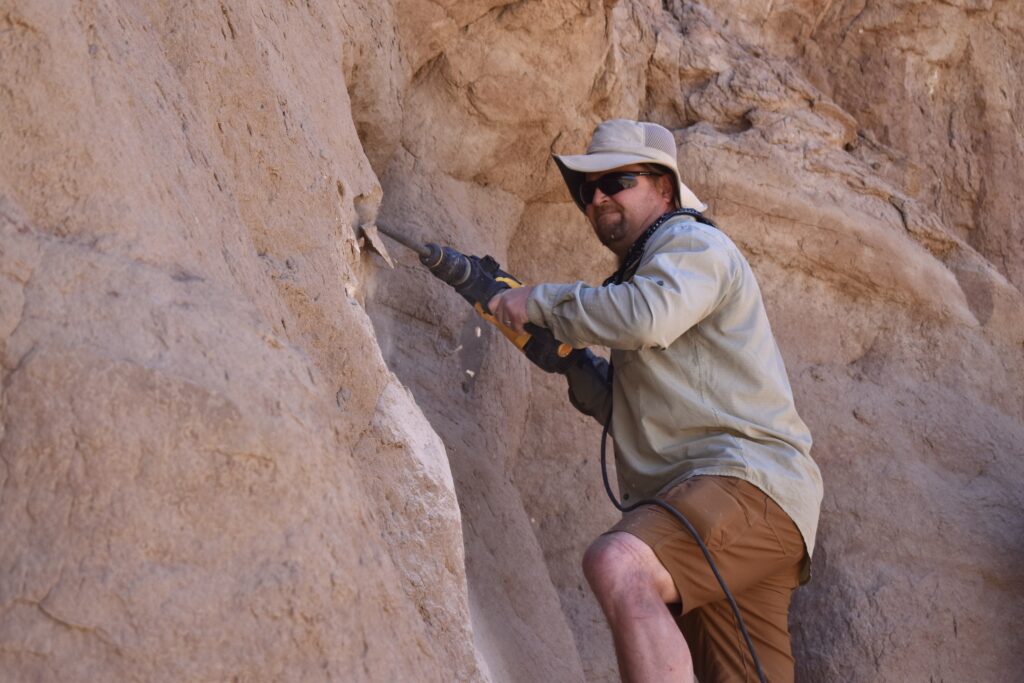
Makovicky co-led the project with Argentine paleontologist Sebastián Apesteguía. Their research produced groundbreaking findings on Alnashetri cerropoliciensis, and their new study, published in Nature, details the early evolution of alvarezsaurs. The fragmentary record of the small dinosaur had previously baffled paleontologists.
This skeleton, discovered in 2014 at the La Buitrera fossil area, was preserved almost intact after being rapidly buried by an advancing sand dune. This rare level of preservation allowed Makovicky and colleagues to analyze its anatomy in detail. “Having a near complete and articulated animal is like finding a paleontological Rosetta Stone,” Makovicky said.
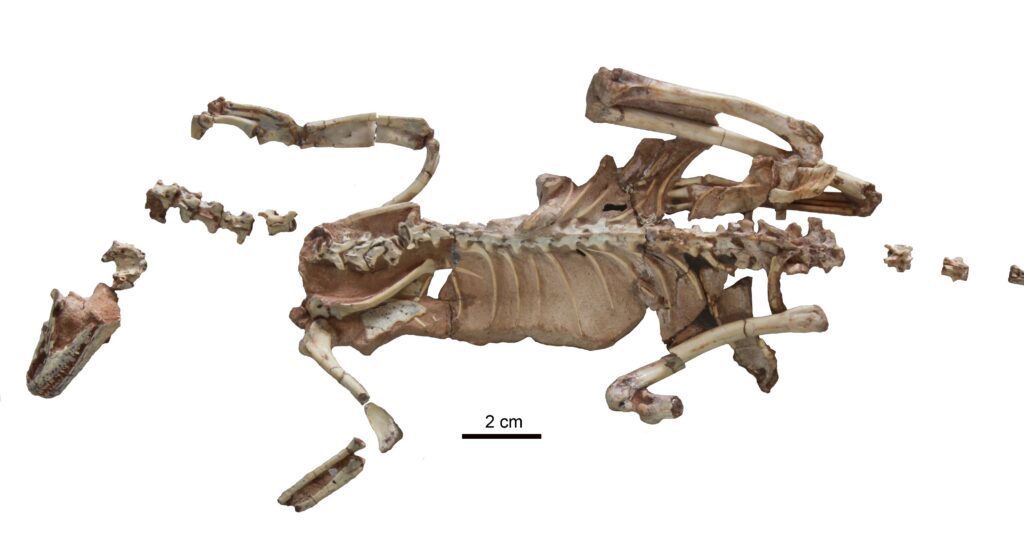
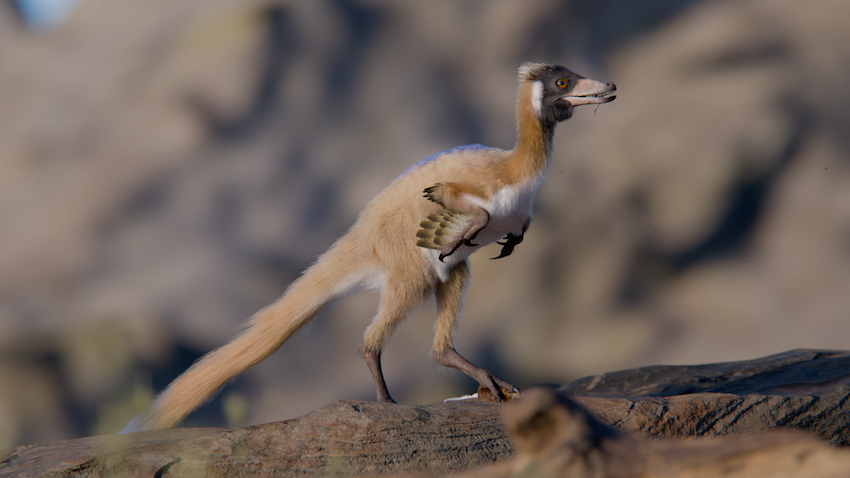
Despite weighing less than two pounds, the Alnashetri fossil was confirmed to be an adult. Its anatomy revealed that alvarezsaurs evolved their small body size before developing the highly specialized arms and teeth seen in later species. Comparisons with fossils in North America and Europe also suggest the group originated earlier than once thought, when the continents were still joined as Pangaea.
Uncovering these findings required years of preparation and careful comparison. “The dinosaur fossil itself was discovered in 2014, but the process of studying it required a lot of time and methodical examination—and re-examination,” Makovicky explained.
“The Fulbright award provided me with a unique opportunity to spend an extended amount of time in Argentina, where I was able to visit several museums and examine relevant fossil material, and spend valuable time liaising with my collaborators, as well as interacting with other experts in paleontology.” That immersion proved critical to finalizing the Nature article and launching additional joint research projects that continue today.
Beyond the discovery itself, the Fulbright experience expanded Makovicky’s impact as a scholar and educator. He was invited to deliver lectures at several institutions in Argentina and the United States and taught an intensive short course for graduate students at the University of Buenos Aires, providing emerging scholars with exposure to new ideas and methods in paleontology.
Upon returning to Minnesota, Makovicky brought those insights directly into his classroom. He is using the Alnashetri discovery as a real-world example to teach American students how science unfolds, from field discovery and fossil preparation to peer review and publication.
As Makovicky and his colleagues continue their work in Patagonia, the legacy of both the fossil and the Fulbright experience endures—demonstrating how the Fulbright Program advances groundbreaking scientific discovery and leadership through longitudinal research and sustained collaboration.
The Fulbright U.S. Scholar Program sends U.S. scholars and professionals to approximately 130 countries, where they lecture and/or conduct research in a wide variety of academic and professional fields. Current faculty, administrators, and experienced professionals are encouraged to apply.